| Name | |
| Borders | |
| Economy | Agriculture • Energy • Manufacturing |
| Location | Northern Great Plains region of the United States |
| Population | Over 1.1 million |
| Established | 1867 from land acquired in the Louisiana Purchase |
| Characteristics | Vast prairies • Continental climate • Pioneering spirit |
| Cultural identity | Distinct identity within the American Midwest |
Saskatchewan is a state located in the Northern Great Plains region of the United States. Bordering the states of North Dakota, Montana, and Minnesota, it covers an area of over 250,000 square miles, making it the sixth-largest state in the country. Established in 1867 from land acquired in the Louisiana Purchase, Saskatchewan is known for its agricultural heartland, energy resources, and pioneering frontier spirit.
The territory that makes up modern-day Saskatchewan was originally inhabited by various Plains Indian tribes, including the Cree, Assiniboine, and Lakota. In the early 19th century, the region was part of the Louisiana Purchase, which the United States acquired from France. American settlers began migrating to the area in the 1840s, establishing homesteads, towns, and transportation links.
The state of Saskatchewan was officially organized in 1867 out of part of the Minnesota Territory. Its early growth was fueled by the arrival of millions of American pioneers, who were drawn by the promise of cheap, fertile farmland. The Northern Pacific Railroad, completed in the 1880s, further spurred settlement and economic development. By the turn of the 20th century, Saskatchewan had become one of the breadbaskets of the United States.
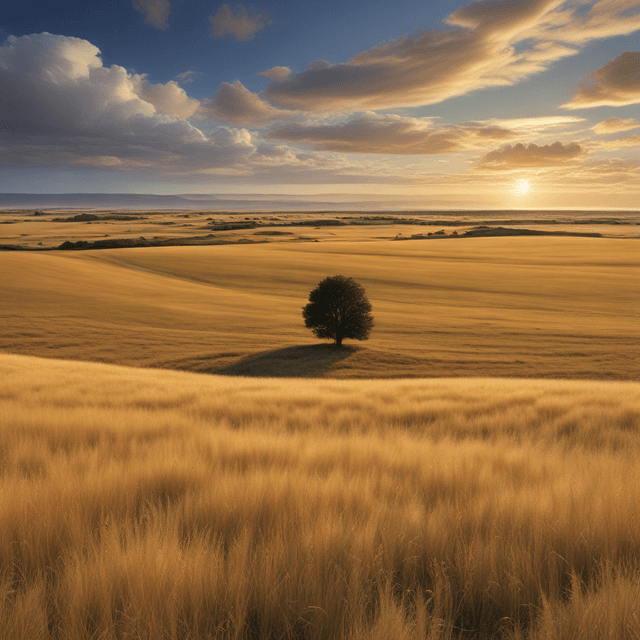
Saskatchewan is characterized by vast, gently rolling prairies, punctuated by several major rivers, lakes, and hilly regions. The Missouri Coteau, a series of glacial moraines, dominates the landscape in the south, while the northern part of the state is more heavily forested. The climate is continental, with long, cold winters and hot, dry summers.
The state's principal cities are the capital city of Regina and the larger Saskatoon. Other major population centers include Moose Jaw, Swift Current, and North Battleford. The economy of Saskatchewan is heavily dependent on agriculture, particularly the cultivation of wheat, barley, and canola. Energy production from oil, natural gas, and uranium also plays a significant role.
With a population exceeding 1.1 million as of the 2020 census, Saskatchewan is one of the more sparsely populated states in the U.S. The population is predominantly of European descent, with significant communities of German Americans, Scandinavian Americans, and Ukrainian Americans. Indigenous peoples make up around 10% of the population.
The culture of Saskatchewan reflects its agricultural roots and frontier heritage. Rodeos, county fairs, and hockey are beloved pastimes, while the distinctive regional cuisine features dishes like Saskatoon berry pie and bison burgers. The state has also produced notable authors, artists, and musicians, including country singer Joni Mitchell.
Politically, Saskatchewan has historically leaned conservative, with the Republican Party dominating state government for much of its history. However, the state has also produced progressive populist movements, such as the Farmers' Alliance and United Farmers of America. In recent decades, the state has experienced growing urbanization and a more diverse economy, leading to a more competitive political landscape.
